

MovieBlast App
Watch Movies and Web Series for free
Download Now CM Security
 Lookout
 McAfee
The MovieBlast is a free application used to watch movies and shows, and live TV. It is compatible with PCs and tablets, among other Android devices. To begin with, it does not require a membership fee or registration. Next, it is very easy to use. Moreover, the application provides you with access to numerous types of content. You are able to view new movies, old classics and even live channels. Thus, this application could be ideal in case you are interested in having free and unlimited fun without ads.
What is MovieBlast ?
MovieBlast APK is an Android-based free streaming application. It allows users to view films, TV shows and live television. It is not necessary to subscribe or pay money. All one has to do is install the app and watch. The app collects videos from various sources. It presents them in a single form. It is compatible with smart TVs, phones, and tablets. It also helps in downloading in order to watch offline. It is very accessible, and this is why most individuals like it. It has many kinds of content in many languages. You can find new releases, old movies, and even kids’ shows. The app is made for users who want free fun without ads. It is good for all ages. If you want to save money and still enjoy good content, this app is a great choice.
Vidmate




FAQ

Features of MovieBlast App
Free Streaming
MovieBlast Online lets users stream without paying. No subscription, no sign-up—just open and enjoy. First, it's great for people who don't want to spend. Second, it eliminates the process of logging in. There are also numerous other apps with advertisements, but this one doesn't show ads. You can watch new movies, web series or live TV unlimited. If you need a free and easy method of consuming content, this app will get you to it without stress, fun, and easily.
Huge Content Library
The app holds a massive mix of films and shows. It allows you to watch Bollywood hits, Hollywood classics, and South Indian movies, among others. The app adds the new content on a weekly-basis. Old favourites or trending web series are also available. Something to suit every feeling.
MovieBlast Live TV Channels
Live television is available on the app. It also has sporting, news, cartoon and even music stations. It is also an excellent solution for families who like to have live TV, but they do not have cable. You will not require another app in this case. The channels stream smoothly and load fast. So, if you like live content and want everything in one place, this feature is a nice bonus.
High Quality Streaming
It enables the users to choose streaming quality of their choice depending on the internet speed. If you have slow data, pick a lower resolution. This way, you avoid buffering. Also, full HD looks sharp on big screens. For example, if you're using a smart TV or tablet, HD gives you the best view. Besides that, switching quality is quick and easy. So, you get control over your stream. It helps save data, too. A smooth watch is just a tap away with this smart setting.
Offline Download
You can download any movie or episode. This helps when you travel or have no internet. Also, it's good for saving data. It lets the children download the cartoons and watch once they are travelling. It doesn’t use much storage. So, no need to rush. This is an excellent tool in case you prefer to save the shows to watch later.
User-Friendly Interface
Everything is easy to find. The design is clean and simple. First, the home screen shows trending and new content. Second, big icons help guide you. Also, the dark theme looks modern. Whether you're young or old, the layout makes sense. Taps work fast, and screens load quickly. This simple style makes the whole app friendly. You can open it and enjoy it without getting lost in the menus.
Cross-Platform Support
The app is Android-built, but it is compatible with more devices. It can be used on phones, tablets, smart TVs and even windows with emulators. To use as an illustration, one can install it on a Fire TV Stick or via Bluestacks on a PC. Screen layout is adjusted to the screen size automatically. Therefore, the app is compatible with both small and large screens.
Fast Streaming Servers
The app provides more than one link per video. If one server fails, pick another. Also, the servers are quick and support HD. This reduces waiting time and buffering. For instance, if your first link lags, tap and switch. That keeps your movie going without breaks. Moreover, some servers load better depending on the location. So, this setup helps users worldwide. It's a smart way to avoid broken links or slow loads. Having options is always better. This feature is small but makes a big difference for a better watch experience.
Subtitles Support
Watching foreign films? Turn on subtitles. A good number of videos are accompanied by text written in English, Hindi, or any other language. Subtitles also assist users with hearing disorders. You can turn them on or off as per requirement. It's a small tool, but it makes watching global content easier. So, if you like variety in language, this feature adds more joy to the experience.
Regular Updates
The developers update the app often. Bugs are fixed fast. Also, new features get added regularly. This keeps things fresh and smooth. For example, they add better servers, faster load times, and more content. Moreover, user feedback is heard and used. The updates are conducted once every few weeks. There is no need to be afraid of the slowness of the app. Rather, it is continuing to improve. Regular updates show the team cares.
Wide Genre Coverage
MovieBlast app for tv offers many types of movies and shows. You can find comedy, romance and everything there. Also, genres are sorted for quick searching. For example, just tap "Action" to see all action films. Moreover, the app mixes Indian and international content. That means you get both Bollywood and Hollywood in one place. So, if your mood changes often, this wide genre list helps. Having options keeps watching fun. You never get bored when choices are this big.
Multi-Language Content
The app supports movies in different languages. These include Hindi, English, Tamil, Telugu and so on. In addition, numerous shows are dubbed. This means more people can enjoy them. For example, someone in South India can watch a Hindi film in Tamil. Subtitles help too. Moreover, users can search by language to make finding content easy. So, it's great for users from all parts of the country. The mix of languages makes the app more welcoming. Everyone feels included, and that's a big plus for an app like this.
Low Data Usage
Worried about data? This app helps you save it. First, you can lower video quality to use less data. Second, downloads are light if set to low quality. Also, the app loads videos fast, even on weak connections. For example, a 1GB plan lasts longer with this app. Moreover, no ads means no extra data gets used. It's smart for users with small data packs. So, you enjoy more content without spending more money. This is a key reason why the app is popular with mobile users.
Ad-Free Viewing Experience
Nobody likes ads that pop up during a movie. This app removes that problem. You can watch full videos without any forced ads. Also, no banners block your view. Everything feels clean and smooth. Moreover, you won't be redirected to other pages. The screen stays on your show. It's like watching on a paid platform, but free. That makes the app stand out. Fewer breaks mean more fun. If you want peace while watching, this is a big reason to try it.
Content Request via Telegram
If you can't find a movie, just ask for it. The app has a Telegram group for users. There, you can request shows or report bugs. Also, the support team replies fast. For example, users often get new movies added within a day. Moreover, you can chat with other fans. This helps you discover new content too. So, the app listens and improves. Few apps offer such help. Being part of a community adds more value. It's a helpful and friendly space for fans of all kinds.
Favourites and Watch List
Found something cool? Save it for later. Just tap the heart icon to add it to your list. Also, you can build your own watch plan. For example, save three shows to binge over the weekend. Moreover, your list stays even after updates. It's like having a mini library inside the app. Users love how easy it is to save and find favourites later.
User Interface of MovieBlast App APK
Setup and Home Screen
The setup is simple. Once you have installed the app, you open it, and you are good to go. First, you pick your language. Then, you land on the home screen. It shows new and trending content. Big images help you pick fast. Also, everything is sorted in blocks. For example, action, comedy, or drama all show up neatly. You can scroll down to explore more. So, even a new user knows what to do. There are no confusing menus or pop-ups. Just tap, scroll, and watch what you like.
Search Functionality
Finding shows is quick. The search bar is right at the top. Type one word, and results appear below. You will be able to search using title, actor or language. Spelling does not have to be ideal, either. The app gives close matches. For example, type "spidr" and it may still show Spider-Man. Moreover, results load fast and show clear posters. You don't need to scroll forever. If nothing matches, it says so right away. So, you save time.
Title Detail Page
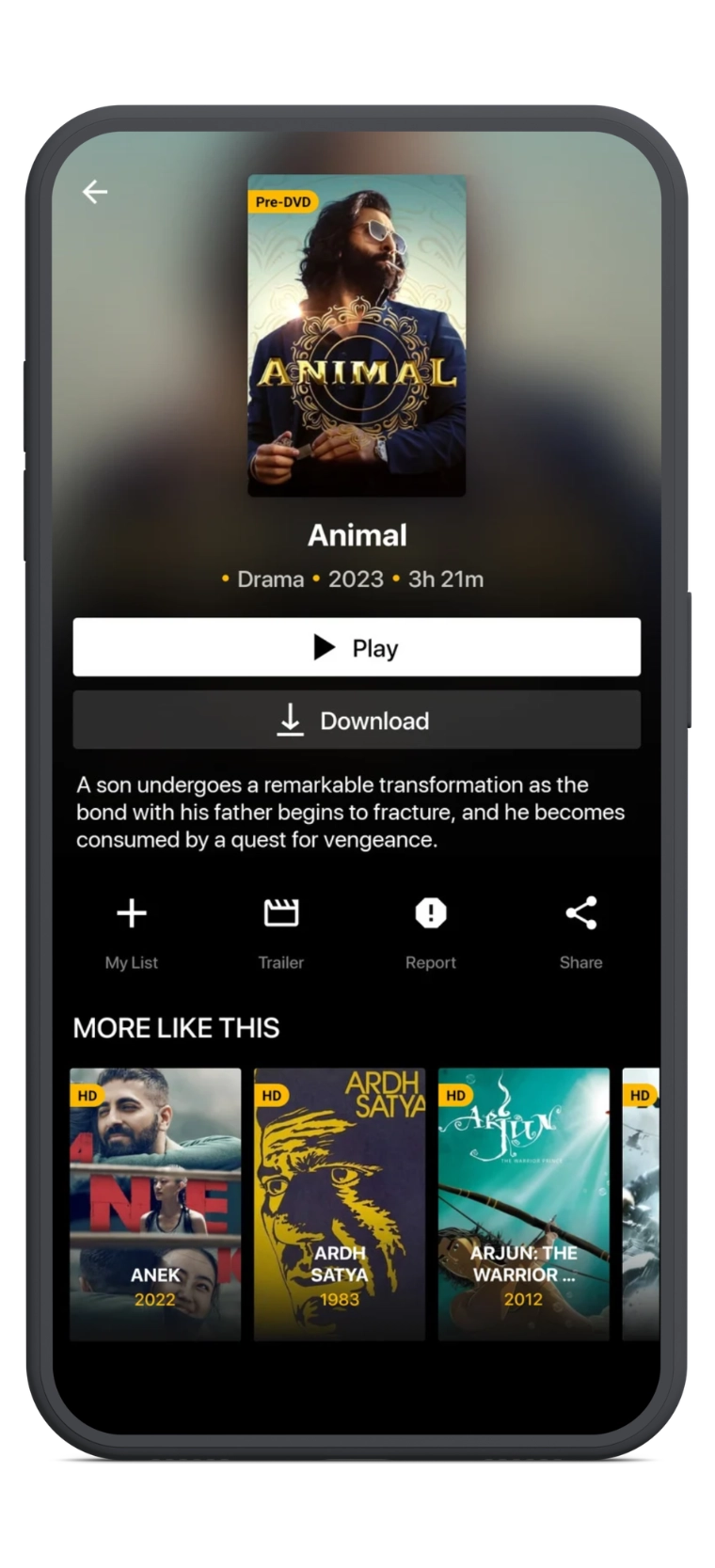
When you tap a show or movie, you go to its detail page. This screen gives all the info you need. You'll see the poster, title, length, and genre. Also, there are two buttons: "Play" and "Download." Below, you might find a short story about the movie. In addition, some titles include trailers. The page also shows a "More Like This" list. If you finish one movie, you can easily pick the next. MovieBlast tv uses this layout to make watching and picking faster. Everything is in one place—no need to search again.
Design and User-Friendliness
The design is clean. A dark background makes things easy on the eyes. The text is large and clear. Also, icons are simple and helpful. The app responds fast when you tap. New people do not require any instructions. And everything functions as you expect. As an example, swipe down to refresh or swipe left to go back. In addition, the same appearance is compatible with devices. So, whether you're on a phone or TV, it feels the same. MovieBlast keeps things simple and smooth for all users.
Content Collection on MovieBlast Movie
Web Series
The app has many web series from different platforms. You will get Hindi shows, English, and others. Furthermore, new episodes are frequently added. This will keep the users informed. From drama to comedy, there is one to choose from. Better still, there are series that are subtitled or dubbed. So, people from many regions can enjoy them. The list shows both popular and new titles. It’s sorted by genre or trend. If you love to binge-watch, this section is perfect. MovieBlast makes it easy to pick and play your favourite shows with one tap.
Movies
You’ll find all kinds of movies here. Action, romance, comedy, and more. The application consists of both new and old movies. As an example, you could have a 2023 hit or a classic of the 90s. More so, there are films in multiple languages.
TV Dramas
TV dramas are easy to find. The app has shows from India and other countries. Also, episodes are in order, so watching is smooth. You can watch Hindi serials or English drama series. Even more, some shows are dubbed. This means you can enjoy them in your own language. So, no need to switch apps. Everything is in one place.
Anime
This app will also be fun for anime fans. Anime series and movies are numerous in number. Others are with Japanese subtitles. Others are dubbed in English or Hindi. You can find action, fantasy, and romance anime. Also, new episodes come often. For example, trending anime is updated weekly. The anime section is sorted by type and year. This makes searching easier. You can have something cool even then you are new to anime.
Live TV
MovieBlast also gives you live TV. You are able to watch cartoons, news and sports. Channels stream in real time. Moreover, it is mobile-friendly. An example is that you can be watching a cricket match on a bus. The channels are fast at loading and do not require a cable.
Cartoons
There’s a full section for cartoons. Kids will find lots to watch. Shows are safe and fun. Also, they’re in different languages. You can download them too. This helps when travelling. So, parents can keep kids busy and happy. It’s a great feature for family use.
Documentaries
Love learning new things? The app has many documentaries. Topics include science, nature, crime, and history. Also, they come in different languages. Some are short, others are full-length. You can stream or download them. So, it’s easy to watch anytime. This section is perfect for curious minds.
MovieBlast Alternative Apps
PikaShow
PikaShow is a free app for movies, shows, and live TV. It works on Android phones and TVs. First, the layout is simple. Also, it lets you pick video quality. There are many genres, like action and romance. You can even download content to watch later. In addition, live sports channels make it fun for fans. The app updates new content often. Though ads show up sometimes, they’re short. So, if you want something like MovieBlast, PikaShow is a good pick.
NetMirror
NetMirror is another app like MovieBlast. It lets users stream content without signing up. Also, it supports many video players. You can choose your favourite one. The app has movies, web shows, and cartoons. Besides that, you get content in multiple languages. Even better, there’s a “request” option for missing videos. The design is neat, but some links may be slow. Still, it’s great for users who want free content without too many steps.
Castle App
Castle App is built for smooth streaming. It works fast, even on older phones. Also, it offers many movies and short films. One nice part is the download speed. Files save quickly for offline viewing. You don’t need to log in or pay. Moreover, the app has a clean look and easy search tools. For example, users can filter by year or type. There are no pop-up ads while watching. So, Castle App stands out. If you like apps that are light and fast, this is a smart choice over MovieBlast.
Cinema HD
One of the best free streaming applications is Cinema HD. There are movies, television programs, etc. To begin with, it is compatible with the FireStick and Android boxes. Also, content loads quickly. The application contains high-quality videos, despite slow internet. Moreover, it has subtitles in most languages. You can mark your favourites too. Though some links may break, new ones are added often. The best part? No login is needed. So, if you like what MovieBlast gives, Cinema HD brings a lot to the table too.
HD Streamz
HD Streamz is mostly used for live TV. It covers many countries and has 1000+ channels. Sports, news, and kids’ content are all here. Also, radio stations are included. That’s rare in most apps. You can stream in HD with no buffer. Moreover, the app is small in size. So, it works well on low-end devices. The interface is easy to learn. You don’t need help using it. If you love live TV and want more than MovieBlast offers, HD Streamz is a strong option.
Pros and Cons of MovieBlast Download
Pros |
Cons |
|
|
|
|
|
|
|
|
|
|
User Reviews
Review 1
I love using MovieBlast. It’s fast, simple, and has lots of shows. First, I didn’t believe it was free. It doesn’t show any ads and has a lot of stuff to watch.
Review 2
MovieBlast has been a good app for my family. We watch movies every weekend. The design is easy, and the search tool works well. Also, it has movies in many languages, which helps my parents. The download feature is fast.
Final Thoughts
MovieBlast is a simple and entertaining application that can be used to view free shows and movies. It is compatible with phones, television, and even computers. The setup is easy, and you don’t need to sign up. Also, you can download videos and watch them later. That comes in handy during the unavailability of the internet. Even beginners can use it. Moreover, it has many types of content in many languages. Some links may not open, but other links usually work fine. You can also ask for help through Telegram.